My Africa
Politics News



South Africa
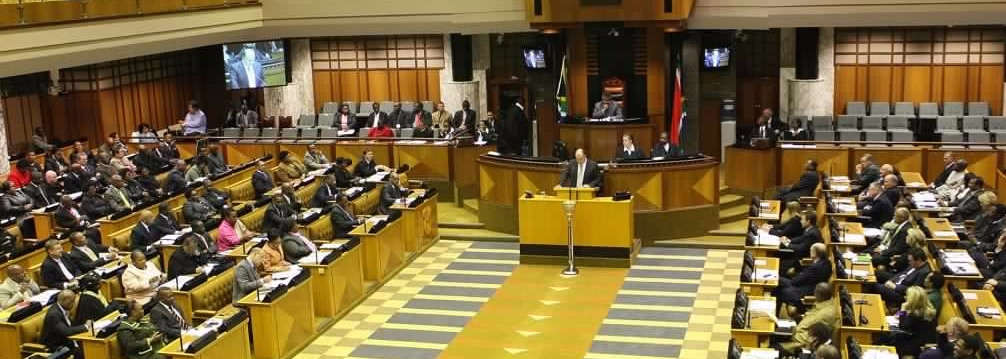
The Republic of South Africa is a parliamentary representative democratic republic. The President of South Africa, serves both as head of state and as head of government. The President is elected by the National Assembly (the lower house of the South African Parliament) and must enjoy the confidence of the Assembly in order to remain in office. South Africans also elect provincial legislatures which govern each of the country's nine provinces.
Since the end of apartheid in 1994 the African National Congress (ANC) has dominated South Africa's politics. The ANC is the ruling party in the national legislature, as well as in eight of the nine provinces (Western Cape is governed by the Democratic Alliance). The ANC received 62.15% of the vote during the 2014 general election. It had received 62.9% of the popular vote in the 2011 municipal election. The main challenger to the ANC's rule is the Democratic Alliance, led by Mmusi Maimane (previously Helen Zille), which received 22.23% of the vote in the 2014 election. Other major political parties represented in Parliament include the Economic Freedom Fighters and the Inkatha Freedom Party, which mainly represents Zulu voters. The formerly dominant New National Party, which both introduced and ended apartheid through its predecessor the National Party, disbanded in 2005 to merge with the ANC. Jacob Zuma has served as President of South Africa since May 9, 2009. The country's next general election will be held in 2019.
South Africa is a parliamentary representative democratic republic, wherein the President of South Africa, elected by parliament, is the head of government, and of a multi-party system. Executive power is exercised by the government. Legislative power is vested in both the government and the two chambers of Parliament, the Council of Provinces and the National Assembly. The judiciary is independent of the executive and the legislature. Government is three-tiered, with representatives elected at the national, provincial and local levels.
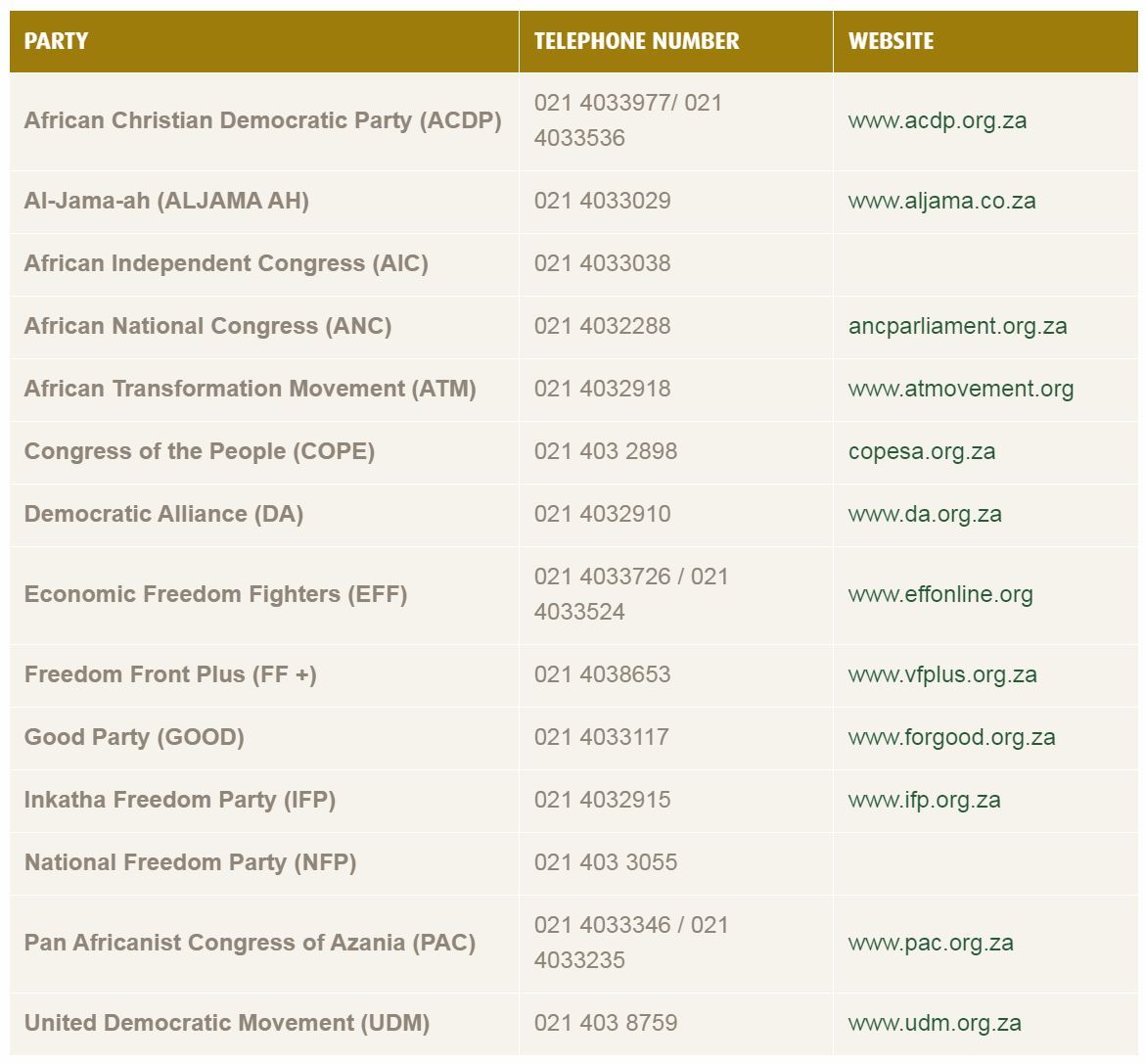
Political Party
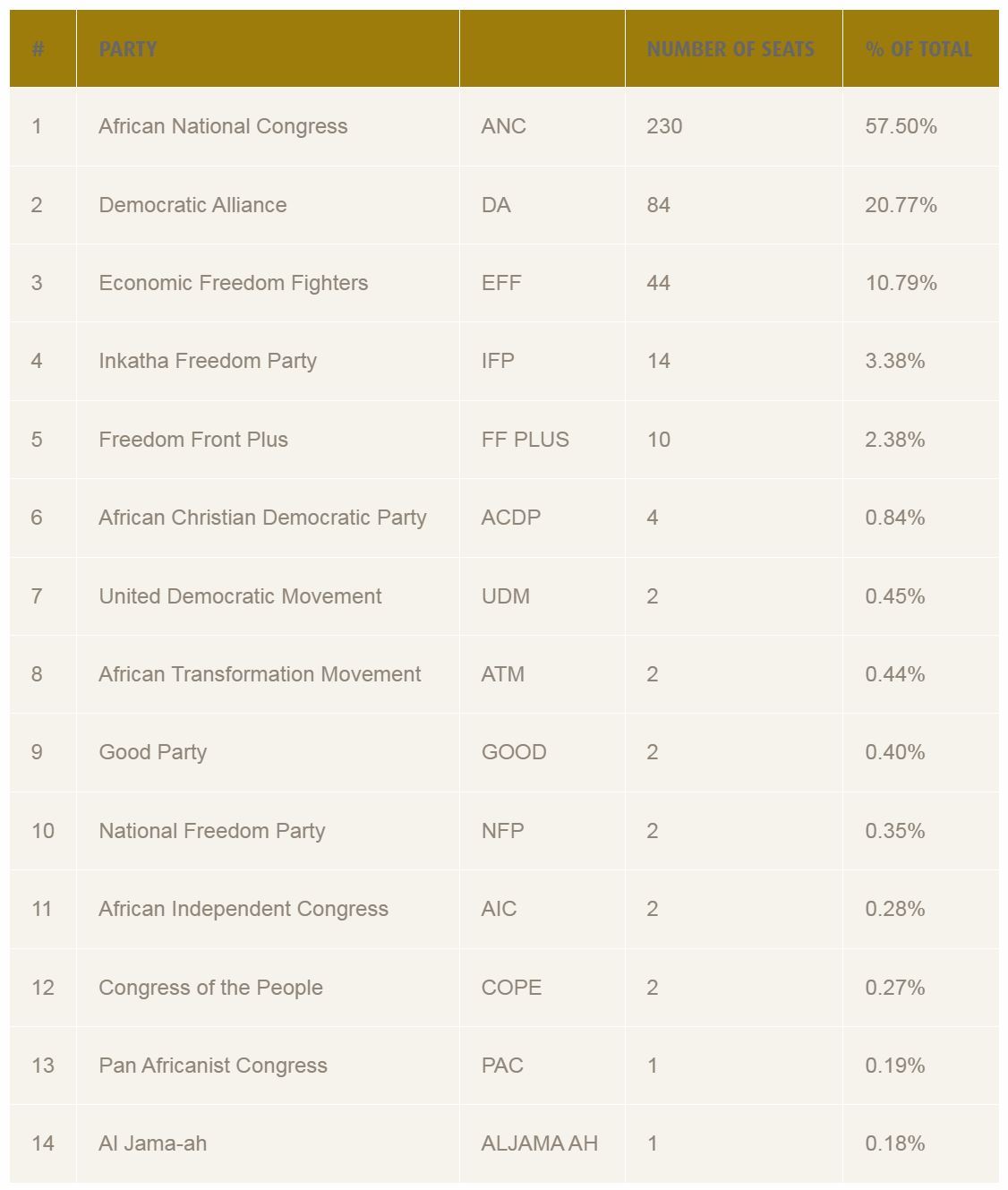
Number of Seats
Parliament
Parliament plays a direct and active role in national affairs. It is the place where the members of Parliament look after your interests. Members of Parliament(MPs) have many responsibilities, including -
- making laws that will improve our lives;
- discussing and debating government policy and other political issues;
- consulting with you, the people, and representing your views in Parliament;
- helping people in their constituencies;
- approving the budgets of government departments, as presented to Parliament by the Minister of Finance;
- making sure that the work that government promised to do is being done; and
- checking that public money is being spent wisely
Our Constitution
For our country’s transition from apartheid rule to democracy, an interim constitution was negotiated between representatives of organisations involved in the liberation struggle, represented political parties and other interest groups. After the first democratic elections on 27 April 1994, members of the National Assembly and Senate, as the elected public representatives at the time, met as a body called the Constitutional Assembly to write a new Constitution. In 1996, after two years of public consultation and much debate, the new Constitution was finally adopted.
Our Constitution lays the foundation for an open society based on democratic values, social justice and fundamental human rights and is hailed worldwide as very progressive. It is the supreme law of our country and ensures government by the people under the Constitution. In other words, the Constitution is the highest law of the land and everyone must act according to its provisions and principles, even Parliament. Because we are a constitutional state, all laws made by Parliament must pass the test of constitutionality. So Parliament has to ensure at all times that the laws it makes are in keeping with the letter and spirit of the Constitution.
How The State Is Constituted And Run
Our Constitution contains an important democratic principle called the separation of powers. That means that the power of the state is divided between three different but interdependent components or arms, namely the executive (Cabinet), the legislature (Parliament) and the judiciary (Courts of law).
- The Executive: The President is the head of state and of the national executive. He exercises executive authority together with other members of the Cabinet, namely the Deputy President and Ministers. The executive develops policy, for example by preparing and initiating legislation which it submits to Parliament for approval. It then implements that policy by running the administration of the country by means of the different government departments. The executive must account for its actions and policies to Parliament.
- The legislature (Parliament):The national legislature or Parliament consists of two Houses, the National Assembly and National Council of Provinces, whose members are elected by the people of South Africa. Each House has its own distinct functions and powers, as set out in the Constitution. The National Assembly is responsible for choosing the President, passing laws, ensuring that the members of the executive perform their work properly and providing a forum where the representatives of the people can publicly debate issues. The National Council of Provinces is also involved in the law-making process and provides a forum for debate on issues affecting the provinces. Its main focus is ensuring that provincial interests are taken into account in the national sphere of government. In specific cases, local government representatives also participate in debates in the National Council of Provinces.
- The Judiciary:The judiciary is made up of the courts, such as the Constitutional Court, the Supreme Court of Appeal, High Courts, Magistrates’ Courts and other courts established or recognised through an Act of Parliament. The head of the Constitutional Court is also the Chief Justice of South Africa. The Constitution states that the courts must be independent and act impartially. Organs of state such as Parliament and the executive must assist and protect the courts in order to ensure their independence, impartiality, dignity, accessibility and effectiveness.